


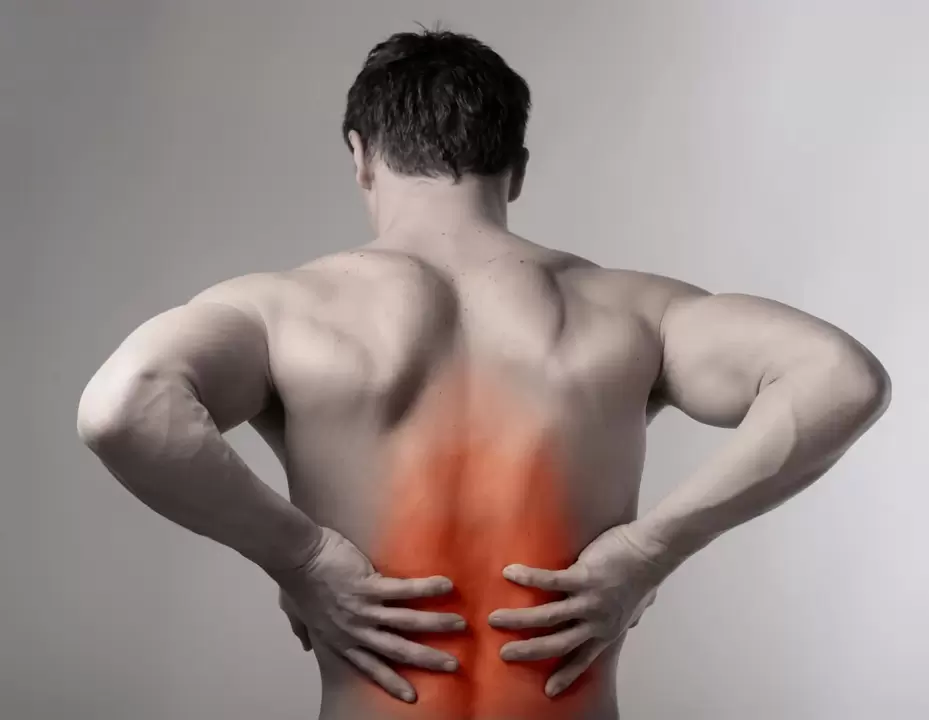
Osteochondrosis is a disease based on degenerative changes in the intervertebral discs, vertebrae and small joints of the spine.Osteochondrosis is a faithful companion of old age.But the diagnosis is made more and more often in young people, which is probably due to predominantly sedentary work, an unhealthy lifestyle and little physical activity.We can safely assume that the majority of the adult population has signs of osteochondrosis.
Reasons
The flexibility, mobility and ability to tolerate physical activity of the spinal column mainly depends on the condition of the intervertebral discs.The basis of the pathological process of osteochondrosis is the malnutrition of the structure of the spinal column, especially the intervertebral disc.This leads to a change in the normal structure of the tissues, the intervertebral disc loses its elasticity, and its shape changes.Such metamorphoses lead to narrowing of the intervertebral discs and, as a result, compression of the nerve roots.In fact, these changes explain the appearance of neurological symptoms, especially back pain caused by osteochondrosis.
After that, degenerative processes occur in the small joints of the spine, and bone growths form on the surface of the vertebrae.All these changes lead to a decrease in the flexibility of the spine.
This transformation of the cartilage and bone tissue is a consequence of the physiological aging of the body.But when exposed to certain adverse factors, dystrophic changes in the intervertebral joints appear ahead of schedule.These factors are:
- obesity;
- Sedentary lifestyle;
- Heavy physical work;
- Occupations that involve prolonged standing or sitting during working hours;
- Flat feet, hallux valgus;
- Deformities of the spine;
- autoimmune connective tissue diseases;
- Fluctuations in hormone levels (pregnancy, menopause);
- Practicing sports;
- Tension;
- Spine injuries etc.
Types of osteochondrosis
The characteristics of the clinical picture of the disease depend on the segment of the spinal column in which the pathological process occurs.The following types of osteochondrosis are distinguished:
- Cervix;
- Chest;
- Lumbar.
Cervical osteochondrosis
Osteochondrosis of the cervical spine is common.The muscular framework of the neck is rather weakly developed, therefore, against the background of osteochondrosis, displacement of the vertebrae occurs even with insignificant loads, and as a result, compression of the vessels and nerves of the neck.This explains the peculiarities of the clinical picture in osteochondrosis of the cervical spine.
So, the main signs of cervical osteochondrosis are:
- Constant pain in the neck and occipital region, aggravated by movement of the neck;
- hemicranial type pain - in one hemisphere;
- Dizziness, tinnitus;
- Pain in the arms;
- Numbness and tingling sensation in the hands.
Thoracic osteochondrosis
Osteochondrosis of the thoracic region is quite rare.The main prerequisite for the development of the disease is the presence of spinal deformities.
Signs of thoracic osteochondrosis:
- Dull, aching pain in the chest, which often surrounds;
- Increased pain when turning the body, sneezing, coughing, laughing;
- Visceral pain in the heart, right hypochondrium, abdomen;
- Numbness, paresthesia in the skin of the chest.
Lumbar osteochondrosis
The most common type of osteochondrosis.This is probably due to the fact that the greatest load falls directly on the lumbar region.Symptoms of lumbar osteochondrosis:
- Painful, less often acute pain in the lower back, which increases with movement or staying in a static position for a long time;
- A feeling of stiffness in the lower back;
- To reduce pain, a person assumes a forced position;
- Aching or sharp pain (for example, lumbago) in the buttocks, thighs, legs;
- Tingling, paresthesia in the legs.
%20in%20lumbar%20osteochondrosis.webp)
Diagnosis of osteochondrosis
Radiographic methods are used to detect osteochondrosis: radiography, computer and magnetic resonance imaging of the spine.The most characteristic and especially early sign of osteochondrosis is a decrease in the height of the intervertebral space.
In the later stages of the degenerative process, marginal growths (osteophytes) appear on the surface of the vertebrae.They are easier to detect on lateral radiographs because the osteophytes are located in front and behind the vertebrae.
In addition, in the case of osteochondrosis, there is a displacement of the bodies of the adjacent vertebrae, which can also be determined on an X-ray.
Treatment of osteochondrosis
Treatment of osteochondrosis is more effective the earlier it starts.As already mentioned, osteochondrosis is a change in the structure of the intervertebral discs and vertebrae.Unfortunately, many people ignore back pain for a long time and do not consult a doctor in time, missing the moment when the pathological process can still be stopped.
Osteochondrosis is treated with drugs, physical therapy, massage and surgery.
Drug therapy:
- Non-steroidal anti-inflammatory drugs in the form of tablets, ointments, injections to relieve pain;
- Muscle relaxants;
- Chondroprotectors - promote the regeneration of damaged cartilage;
- vitamin and mineral complexes;
- vasodilators;
- Medicines that normalize metabolism in tissues.
After eliminating the aggravation of the disease, you should proceed to rehabilitation.Thus, physical therapy is a very important aspect in the fight against osteochondrosis.Performing certain exercises contributes to the development of muscle ligaments.This is extremely important, since the physical load is distributed evenly along the spine thanks to the strong ligament.By regularly performing the exercises, the stiffness of the spine disappears and the range of motion increases.Massage, physiotherapy, reflexology and spinal traction help enhance the effect of physical therapy.
If complications occur in the form of intervertebral hernia, radiculitis, and if conservative treatment is unsuccessful, surgical intervention should be used.The aim of the surgical treatment is to eliminate the compression of the nerve roots and blood vessels, as well as to stabilize the structure of the intervertebral disc or vertebra.
Home treatment of osteochondrosis
Folk remedies help relieve the symptoms of osteochondrosis, but in no case can they replace the main treatment.You can find many traditional treatment methods on the Internet, but not all of them are safe, so be sure to consult your doctor.
Traditional medicine
The general principle of folk treatment of osteochondrosis is the use of substances that have an irritating effect.The result is an improvement in blood supply to certain areas of the body, as well as a reduction in pain.
The following rubbing recipe is known in folk medicine: mix 0.25 cups of vodka with 0.5 cups of honey, add 0.75 cups of grated radish and two tablespoons of salt.The resulting mixture should be rubbed into the troublesome area of the back twice a day.The procedure must be repeated within a week.
To relieve the pain, you can apply a potato poultice on your back.Grated raw potatoes should be mixed with honey in equal proportions.Then wrap the resulting mixture in gauze, apply it to your back and wrap it with a scarf.You can also use a poultice on your burdock.To prepare it, pour a glass of boiling water into a spoonful of finely crushed burdock leaves.Wrap the mixture in gauze and place it on your back for half an hour.After removing the compress, be sure to wrap your back with a warm scarf.
You can do it even more simply: grate the radish, put it in cotton stockings, then lie on your back.
Please note: It is important to be careful when using folk remedies and not to touch your face with your hands.Radishes and other plants can cause burns to the cornea if they come into contact with the eye.
Therapeutic gymnastics
Physical exercises can only be performed outside the period of exacerbation.In case of acute pain, you should refrain from doing gymnastics, because this will only lead to increased pain.
An approximate sequence of exercises might look like this:
- Lie on your back and straighten your legs.Pull the toe of your right foot towards you and the toe of your left foot away from you.This should be done individually.
- Lying on your back, place your hands behind your head.The legs should be brought together and bent at the knees.Bend your knees to the left and turn your head in the opposite direction.Hold it for just a few seconds.Then move your knees to the right and your head to the left.
- Lie on your back, arms along your body.Bend your knees and lift your pelvis.Stay in this position for a few seconds.Lower your pelvis as you exhale.
- Turn on your side.Straighten your top leg and swing it back and forth.
- Starting position on all fours.Arch your back, hold for just a few seconds, then arch your waist.
- Turn onto your back.Pull your bent left knee toward your right elbow and vice versa.